Flat
Plenty of spice, no depth. It tastes of a list rather than a dish, because the base never cooked down to the point where the fat separates.
An Indian home cooking reference for Western kitchens
325 recipes and the method behind them. Not a list of ingredients, a sequence. Most flat Indian food at home fails at the moment something met the pan, and this book teaches you to see that moment and fix it.
Sarla is an AI generated presenter. She has no biography and has never cooked or tested anything in this book. The recipes were developed from established published methods and checked for quantity, timing and food safety.
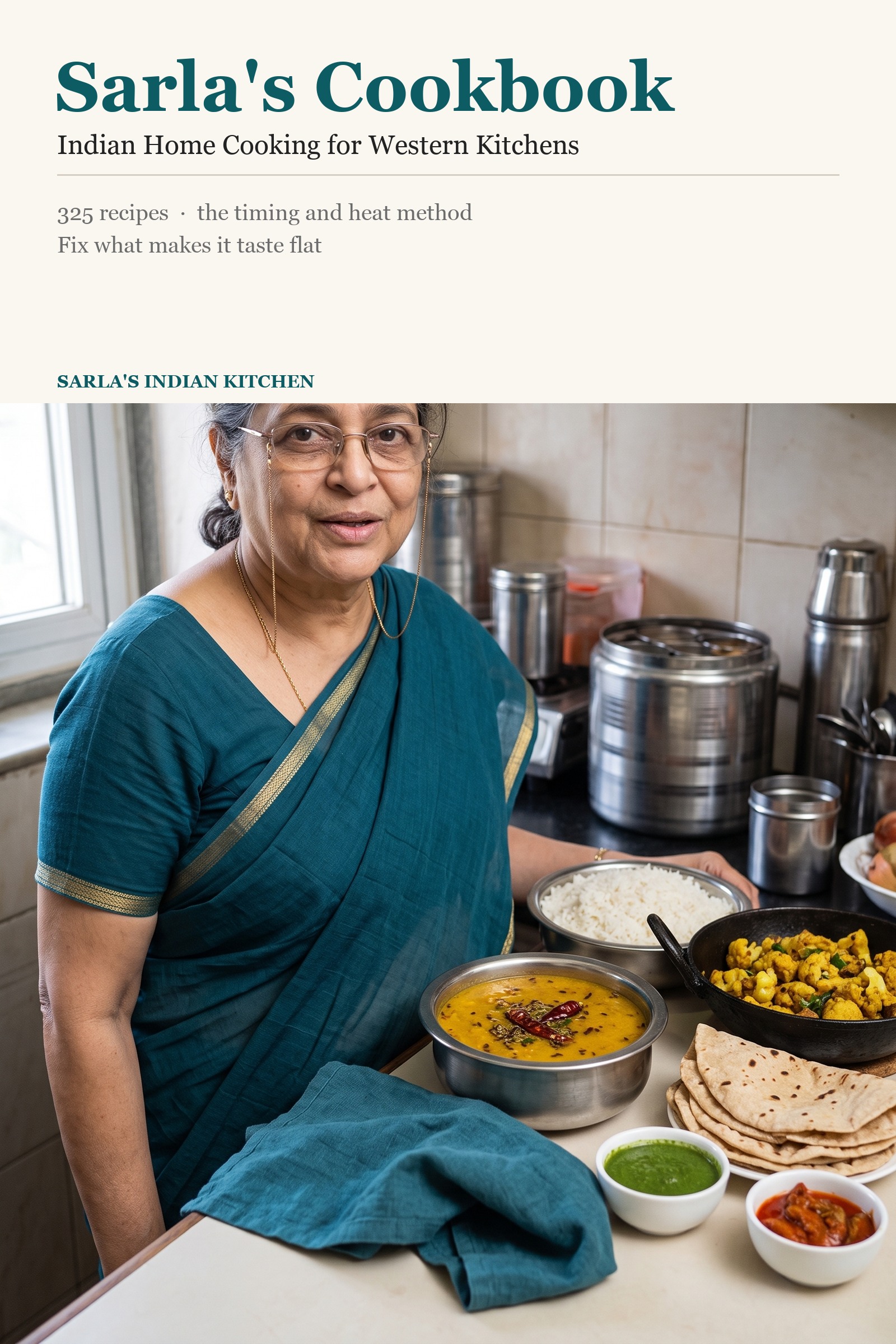
You followed the recipe. You bought the spices. And the dish came out thin, dull and a little sad. Almost every time, the cause is timing and heat. Something went into the pan at the wrong moment, or met the wrong heat, and nothing later in the recipe could save it.
Plenty of spice, no depth. It tastes of a list rather than a dish, because the base never cooked down to the point where the fat separates.
Ground spice hit a pan that was too hot, or garlic caught. Bitterness sits on top of everything and no amount of salt, cream or sugar removes it.
The spices went in raw rather than bloomed. The most common failure of all, and a heat failure rather than an ingredient failure.
More fat than the base can hold, which means the base was never cooked long enough for the fat to emulsify back into it.
684 pages. 325 recipes. Fourteen parts, each one starting with the method and then applying it.
What you actually need, the eight spices that cook twenty dishes, and your first five dishes in order.
The timing and heat diagnosis, reading a dish by sight and sound and smell, and the Western kitchen problem.
Whole against ground, the moment they burn, tadka, and the order of the pan. 14 recipes.
Buying, rinsing, soaking, water, heat, resting, and the food safety rule. 24 recipes.
Six pulses, soaking, the pot against the pressure cooker, and the kidney bean rule. 30 recipes.
Flour, dough, resting, rolling, the pan, and why it will not puff. 27 recipes.
Water, crowding and the dry finish, plus doneness for every vegetable. 35 recipes.
Fresh, coconut and tamarind, the four elements of balance, and texture. 21 recipes.
The base, the onion stage, the fat separating point, the rescue, the finish. 38 recipes.
Shopping by category in the UK and US, substitution by function, and a week of cooking. 14 recipes.
The troubleshooting index, the spice timing chart, conversion tables, glossary and sources.
Idli, dosa, poha, upma, pakora, chaat and the batters behind them. 31 recipes.
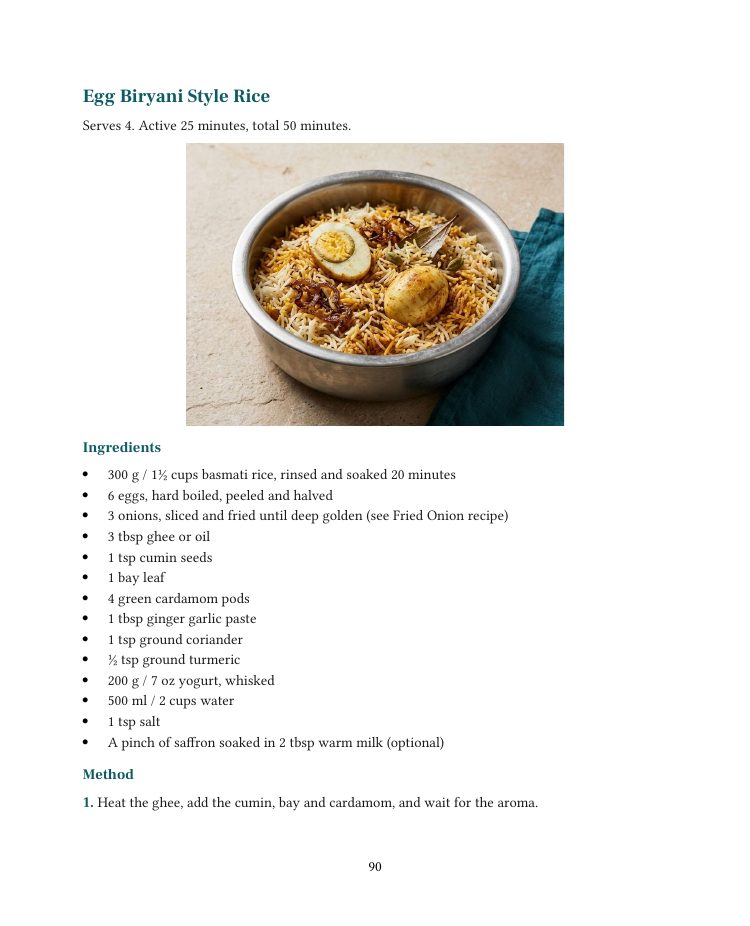
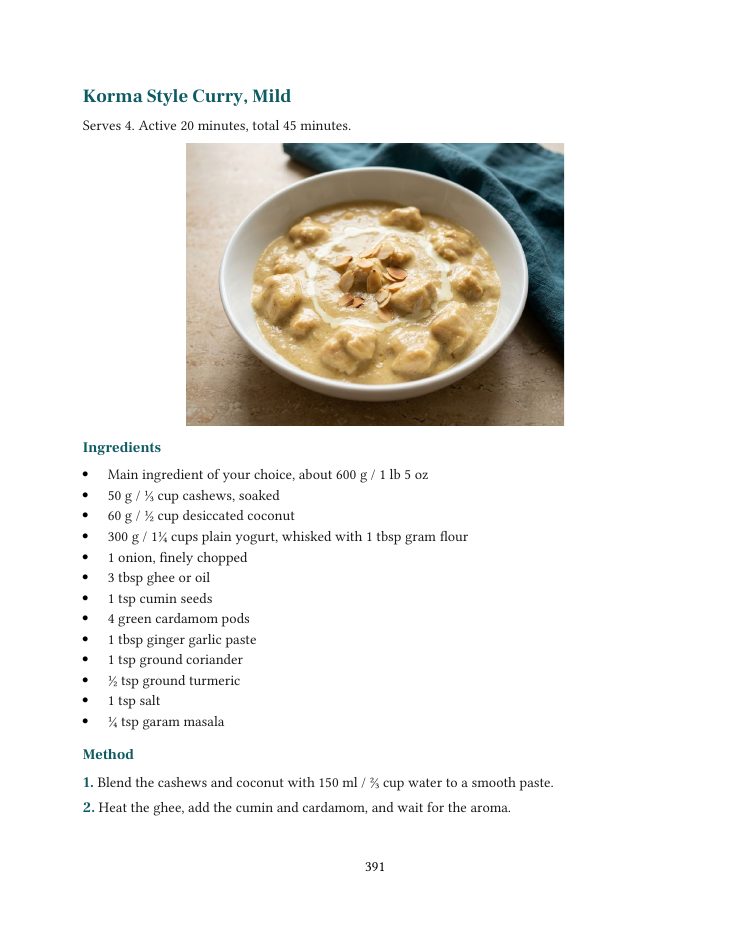
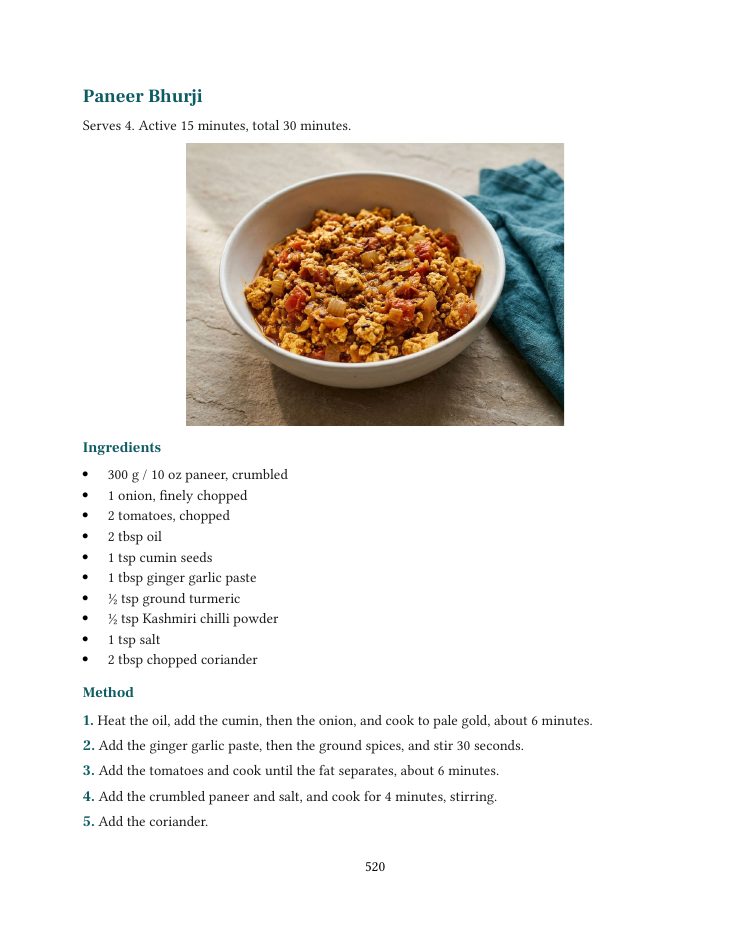
Real pages from the book. Nothing staged, nothing mocked up.
A year of that is more than a thousand dollars, and the results do not improve.
About the price of one takeaway for two, and it does not get eaten.
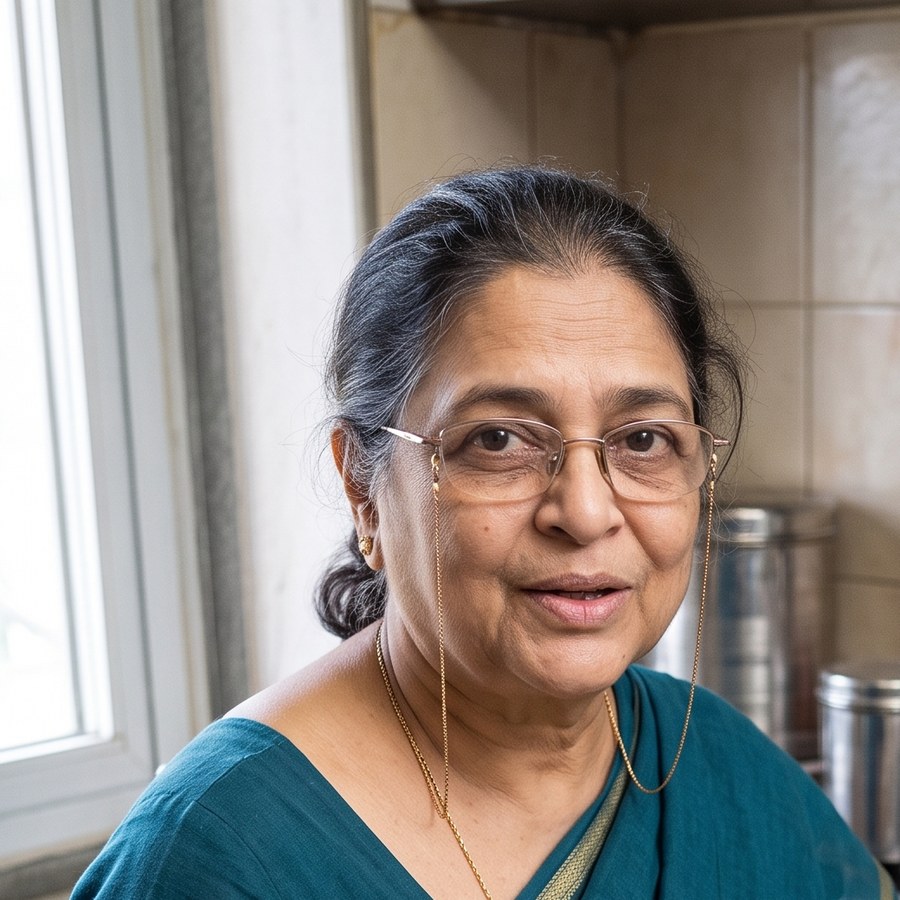
Sarla is the cook this book is voiced by. She is an experienced Indian home cook in her sixties, in a small lived-in kitchen, and she corrects the mistakes that make Indian food taste flat without ever making you feel stupid for making them.
Sarla is an AI generated presenter. She is not a real person. She has no surname, no biography and no family history. She has never cooked, tasted or tested anything in this book, and nothing here should be read as a claim that she has.
What the book gives you is a method drawn from established published practice, checked for quantity, timing and internal consistency, with every food safety statement traced to an official source and listed at the back.
A 684 page PDF, downloaded immediately after payment. 325 recipes with photographs, the method chapters behind them, a troubleshooting index, a spice timing chart, conversion tables and a shopping guide for the UK and the US.
No. It is a digital PDF you download and keep. You can read it on a phone, tablet, laptop, or print the pages you use most. The spice timing chart is designed to be printed.
Sarla is an AI generated presenter. She has no surname, no biography and no family history, and she has never cooked or tested anything in this book. What the book contains is a method drawn from established published practice, checked for quantity, timing and food safety, with the food safety sources listed at the back.
The recipes are the book's own development. They were written from established methods for each family of dish and checked for quantity, timing, internal consistency and food safety. Nobody cooked every one of them before publication, and the book does not claim otherwise. If you find a mistake, tell us and we will fix it.
One heavy frying pan, one saucepan, one large pot and a knife will cook almost everything in the book. You do not need a tandoor, a karahi, a tawa or a pressure cooker, and every recipe that offers a pressure cooker gives a stovetop route beside it.
Yes. Seven days, no questions asked. Email support@sarlasindiankitchen.com and we will refund you.
The book is written for both countries. Ingredients are given metric first with US customary beside them, and every ingredient that has two names carries both, so coriander and cilantro, aubergine and eggplant, prawns and shrimp.
Email support@sarlasindiankitchen.com. That address reaches a human, and we read it.
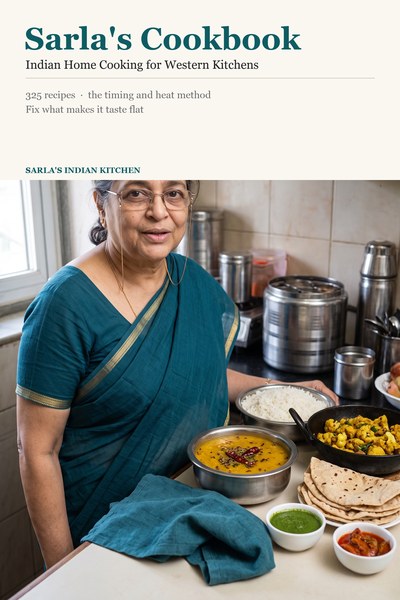
Indian Home Cooking for Western Kitchens. 684 pages, 325 recipes, and the method that makes them work.
Instant download. PDF. 7 day refund, no questions asked.